
My Barware
The origin of my barware begins with a childhood living on British army camps in Germany – initially Bielefeld and later on JHQ (Joint Headquarters) Rheindahlen. Summers tended to involve European breaks, whilst winter months were foreign holidays or driving down to the Alps.
I really enjoyed walking around the cellars of the champagne houses in Epernay – in shorts and t shirt it was quite chilly but it had fake candle effect bulbs and a sort of mysticism to it.
.

.
It was a sort of feeling of elegance and grandeur that I have held a romanticism for – for years, leading to an A-Level feasibility study in 2006, and at least one attempt to set up a ‘nano’ (allotment) vineyard in Salisbury.
.

.
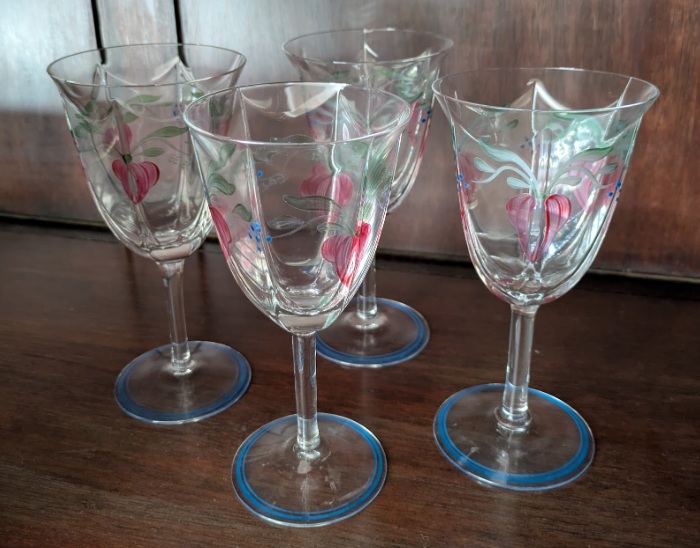
The inspiration for the octagonal shape was a mash-up between the love of the trips to champagne houses, and my mum’s Swedish Orrefors wine glasses.
.
.
My parents received four of these hand painted glasses from a friend of my nan’s in Sweden – two for their engagement, and two more when they married. The shape – hexagonal flaring out to be circular – was fascinating to me.
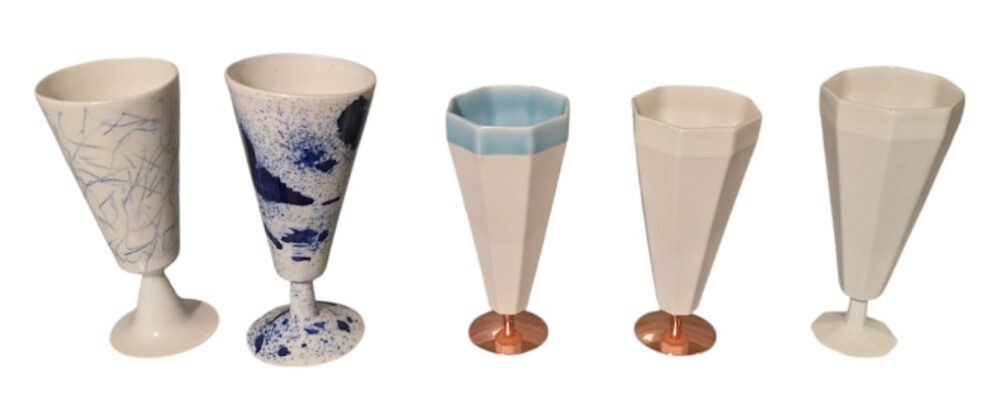
My own octagonal champagne flute, leant on the use of angular form and a more subtle use of colour change for contrast. With later versions achieving translucency, and including a solid porcelain stem and foot edition.
.
.
After forays into allotment vineyards and a co-operative micro-brewery, I launched: Heathland Gin. This, as well as my friends love for cocktails – is probably my reference point for starting to develop my tumblers and highballs.
.
.
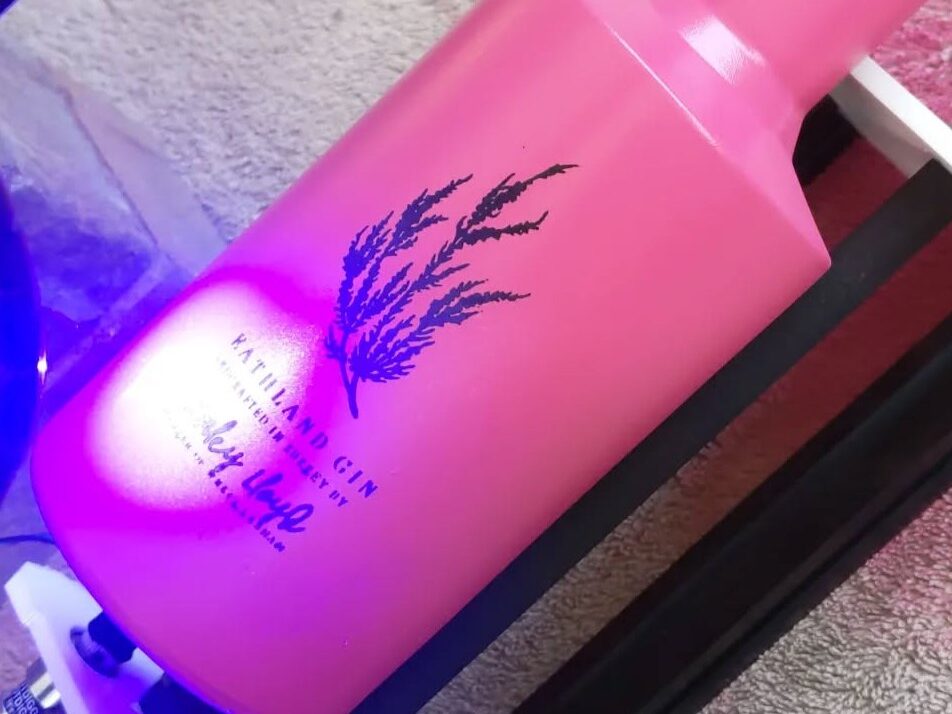
I remember providing socially distanced gin and tonics on the drive, during ‘clap for carers’, and in the picture was a Limited Edition bottle concept.
.
.
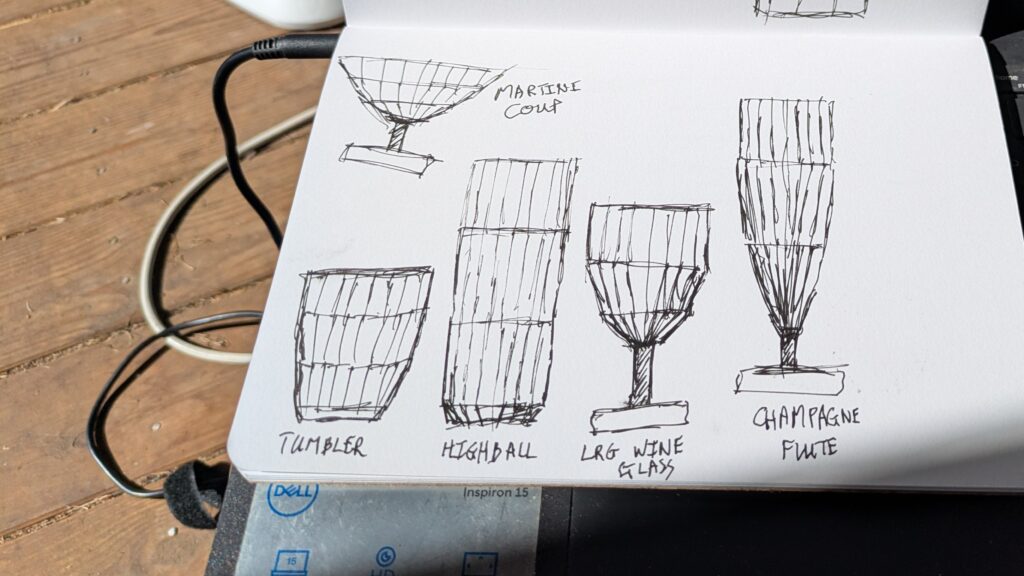
The initial octagonal design has now developed into a complete range of 12 sided barware, including: a tumbler, highball, wine glass, champagne flute and martini glass.
.
.
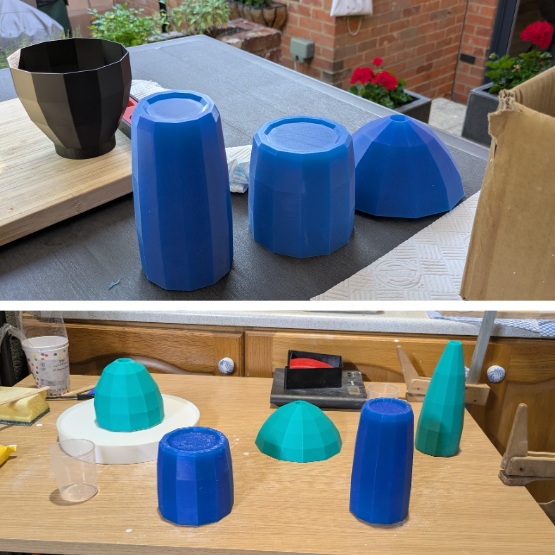
From concept to usable moulds took three months – albeit eighteen months of R&D. But they continue in a similar style – using raw white porcelain (with a pure gloss rim).
.
.
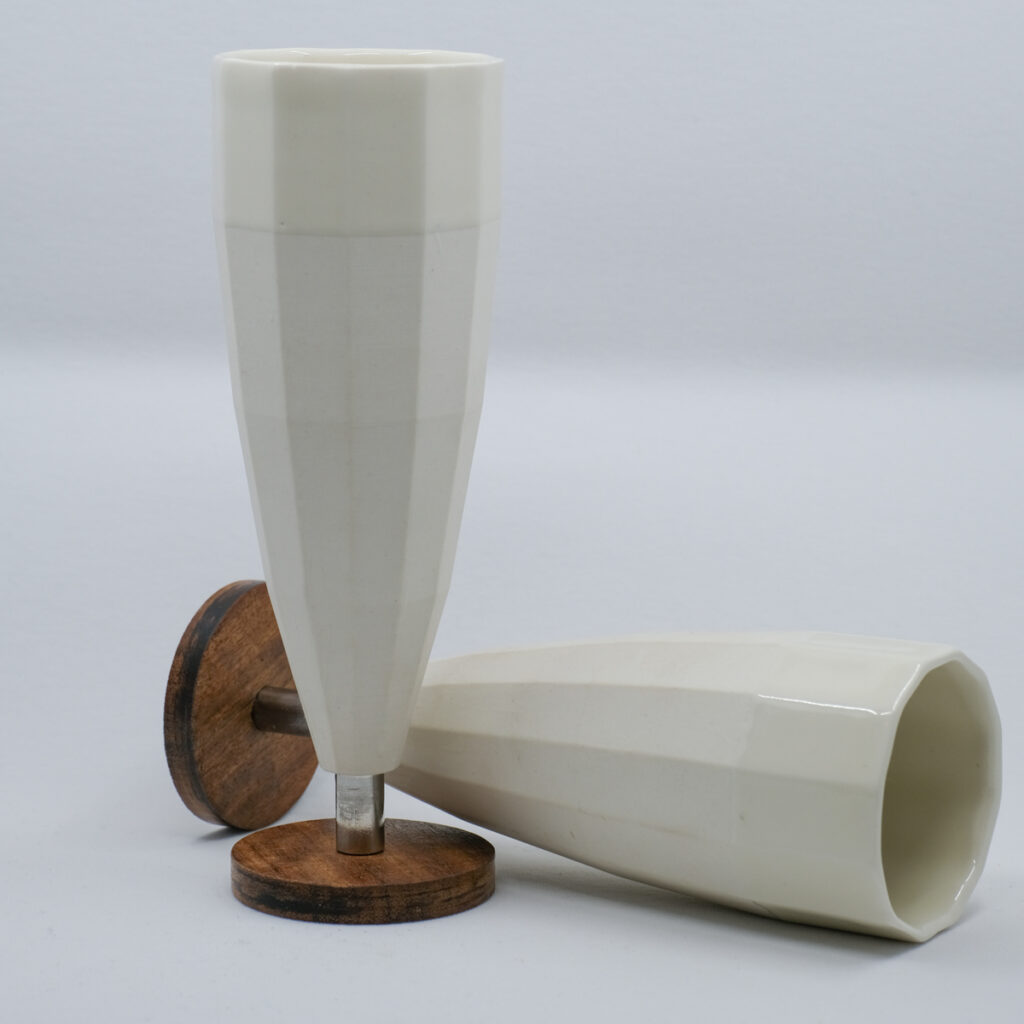
They now feature stainless steel stems and a detachable wood foot – meaning the remaining chalice and stem are dishwasher safe. Whilst replacement feet will ensure they remain serviceable.